Getting kids to build healthy routines isn’t always easy. Healthy habits worksheets can make it a little simpler by turning everyday things like getting enough sleep, drinking water, eating nutritious foods, and staying active into fun, easy-to-understand activities kids can do.
Printable tools give them a chance to learn and take an active role in building their everyday routines.
In this article, you can explore worksheets and handouts that can help children develop healthy habits at home, school, or in therapy.
Managing Depression with Exercise Worksheet

Exercise can be a helpful part of managing depression in children and teens. Physical activity can support mood, increase energy, and provide a healthy routine. However, when a child is struggling with depression, finding the motivation to exercise can be difficult.
Research suggests that moderate physical activity can have positive effects on mood. Even 10–30 minutes of exercise can promote more positive emotions [*]. Start with small, manageable activities to make getting active feel more achievable.
The Managing Depression with Exercise worksheet gives kids a chance to think about what types of movement they actually enjoy, from walking and biking to sports, dancing, or exercising with a friend. You can use it to help a child choose a few activities, set realistic goals, and create a simple exercise routine. The weekly chart can then help children track their activity and notice how they feel before and after exercising.
Managing Stress with Good Sleep

A good night’s sleep can make it easier for children to handle everyday stress. When kids are well - rested, they may have an easier time managing their emotions, staying focused, and responding calmly when something feels overwhelming. On the other hand, too little sleep can leave them feeling more irritable, tired, or easily frustrated.
The Managing Stress with Good Sleep handout can be used as a starting point for a conversation about a child’s sleep routine. Parents, therapists, or teachers can go through the tips with the child and choose one or two ideas to try first.
Kids can then practice these habits as part of their bedtime routine and talk about which strategies help them feel more relaxed and ready for sleep.
Managing Stress with Healthy Eating

What kids eat can play a role in how they feel throughout the day. A balanced diet provides nutrients and energy children need to support their bodies and cope with everyday stress.
Rather than focusing on restricting certain foods, it can be more helpful to encourage a variety of fruits, vegetables, whole grains, healthy fats, and other nourishing foods.
The Managing Stress with Healthy Eating handout introduces simple ways to make nutritious choices, such as adding colorful fruits and vegetables and including sources of omega-3 fatty acids. You can use it to start a conversation about how different foods can support mental health.
Managing Stress with Exercise Handout

This handout offers ideas for making movement part of a child’s daily routine, while reminding them about the benefits of exercise.
It introduces simple ways to make physical activity more enjoyable, such as spending time outdoors or dancing. It can also help children see exercise as more than just a way to stay physically healthy, but a fun and accessible tool for managing stress and supporting their mood.
Keep this handout somewhere accessible so kids can refer to it whenever they need an idea for managing stress.
Sleep Hygiene
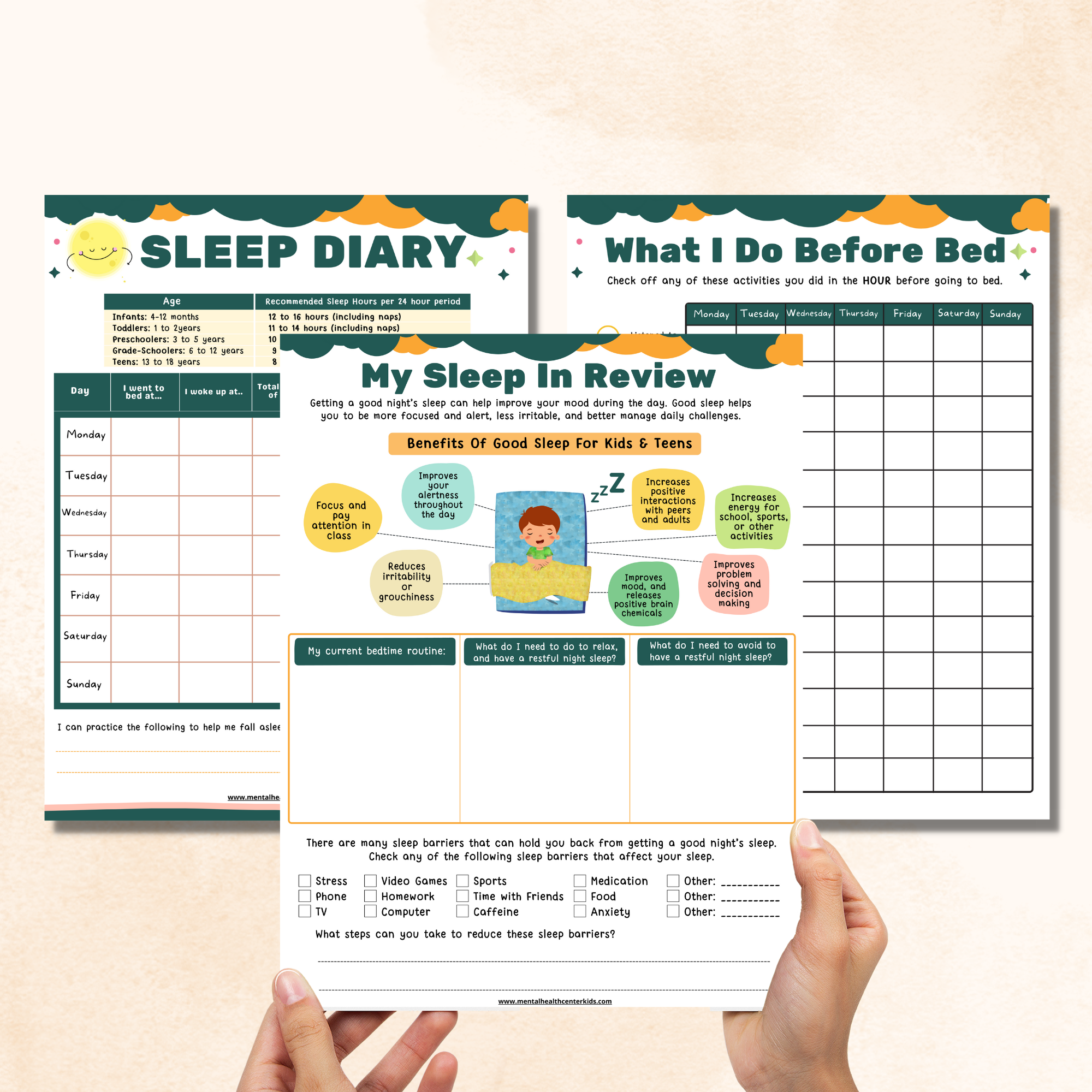
Sleep hygiene refers to the everyday habits and routines that help make quality sleep easier. Simple habits, such as having a regular bedtime and creating a relaxing wind-down routine, can make a difference over time.
The My Sleep In Review, Sleep Diary, and What I Do Before Bed worksheets can help turn these ideas into regular habits. Kids can review their current routines, track their sleep, and notice what they do in the hour before bedtime.
Using these worksheets can help children recognize patterns and gradually build a bedtime routine that works for them.
Tips to Improve Sleep

Small changes to a child’s daily routine can make it easier to get restful sleep at night. Factors that affect sleep include daily routines and activities, eating habits, and the environment during sleep.
The Tips to Improve Sleep handout brings these ideas together in one easy-to-reference guide. Parents, therapists, and teachers can print it and place it somewhere visible, such as a bedroom or classroom.
Kids can choose a few strategies to try and use the handout as a reminder while they work toward making healthy sleep habits part of their routine.
Benefits of Good Sleep

Getting enough sleep does more than help children feel rested the next morning. Good sleep can help children stay focused and alert, think more clearly, manage their emotions, and have the energy they need for school and activities.
When children don't get enough quality sleep, it can affect more than how tired they feel. Research has linked sleep problems with difficulties in attention, memory, emotions, and behavior [*].
The Benefits of Good Sleep handout gives children a visual reminder of why sleep matters. It can be posted in a bedroom, classroom, or therapy space and used to discuss healthy sleep habits.
Benefits of Drinking Water

Staying hydrated is a habit that many children struggle with. This handout explains how drinking enough water can support health. It provides ideas for making drinking water easier to remember.
This handout can be displayed in a classroom, school health office, or other space where kids regularly spend time. At home, parents can post it on the refrigerator, pantry door, or near a child’s water bottle so the tips are easy to see during the day.
Benefits of Physical Activity

Regular physical activity isn't just good for children's physical health.
This handout gives children a clear, encouraging overview of why regular movement matters. It highlights the benefits of staying active while also making exercise feel more approachable and achievable.
It can be useful for helping children understand the bigger picture of physical activity and why it is worth making part of their routine.
Healthy Habits

Healthy habits can give children a steady foundation for managing stress. The Healthy Habits handout emphasizes starting small rather than trying to change everything at once, which can make healthy habits feel more realistic and manageable for kids.
This is a helpful resource to introduce the connection between daily routines and stress management. It can also pair well with the individual sleep, nutrition, and exercise resources covered earlier, and help children bring those strategies together.
Printable Tools That Make Healthy Habits Stick
Healthy habits are easier for kids to build when they are simple, visible, and practiced consistently.
Use these resources as teaching tools, discussion starters, visual reminders, or take-home resources. They can be helpful for parents and caregivers at home, teachers in the classroom, and therapists or other professionals working with children.
If you’re interested in a bundle, the Healthy Habits for Kids Handout Bundle brings together kid-friendly resources on sleep, hydration, physical activity, healthy eating, personal hygiene, and other healthy habits.
References:
- Huang W and Wong TL. Exercise prescriptions for young people’s emotional wellbeing: a systematic review of physical activity intensity, duration, and modality. Front. Psychol. 16:1552531. doi: 10.3389/fpsyg.2025.1552531
- Liu J, Ji X, Pitt S, Wang G, Rovit E, Lipman T, Jiang F. Childhood sleep: physical, cognitive, and behavioral consequences and implications. World J Pediatr. 2024 Feb;20(2):122-132. doi: 10.1007/s12519-022-00647-w. Epub 2022 Nov 23. PMID: 36418660; PMCID: PMC9685105.