So much of a child’s daytime mood and behavior traces back to what happens at night. These sleep hygiene worksheets are designed to make sleep patterns easier to understand and manage. They turn a vague struggle like “bedtime is hard” into something families can work through together.
What is Sleep Hygiene?
Sleep hygiene refers to the daily habits and environmental factors that shape sleep quality. Good sleep hygiene includes:
- A consistent bedtime
- A calming wind-down routine
- A room that supports rest
- Sensible limits on screens or caffeine in the evening
Poor sleep hygiene can make it harder for children to fall asleep or stay asleep. Irregular bedtimes, stimulating activities before bed, and too much screen time are common examples that can interfere with healthy sleep.
Think of sleep difficulties as a skill that can be developed rather than simply a behavior problem. A child who resists bedtime or wakes up irritable most mornings usually isn’t being difficult. Instead, they might not have a routine that works yet.
Research shows that positive bedtime routines, along with other strategies such as written diaries to monitor children’s sleep patterns, can improve children's sleep quality. Routines included calming activities before bed, consistent sleep schedules, and creating a regular place for children to sleep [*].
A study has also found that toddlers with consistent bedtime routines were better able to regulate their emotions by age 3. These stronger emotional skills were associated with fewer emotional and behavioral problems later in childhood [*].
Teaching children about sleep hygiene early helps them recognize how everyday choices affect their energy, mood, and overall health.
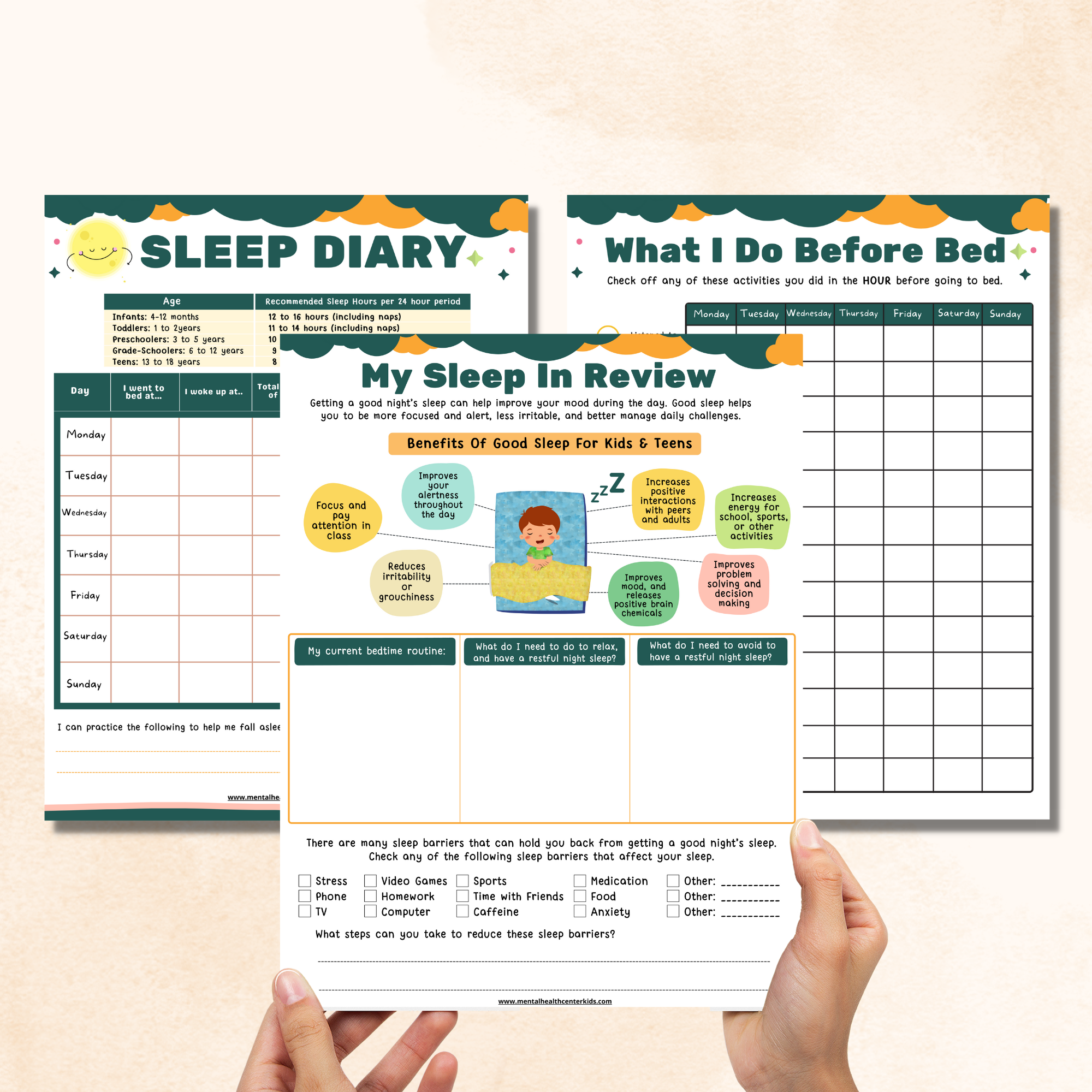
Sleep Diary Worksheet
A sleep diary helps children and teens become more aware of their sleep habits by recording their sleep patterns each day.
This worksheet includes age-based sleep recommendations, so parents can quickly check whether their child’s total sleep hours fall within the recommended range for their age group. They can also track the time they went to bed, the time they woke up, whether they had trouble falling asleep, and how they felt when they woke up.
Children are also encouraged to reflect on one habit they can practice to help themselves fall asleep more easily.
Keeping a sleep diary for one to two weeks can reveal patterns that are easy to overlook. For example, a child may notice they feel more rested after following a consistent bedtime.
How to use this worksheet: Encourage your child to complete the diary each morning after waking up. After one or two weeks, review the diary together and look for patterns, such as:
- Do they get enough sleep for their age?
- Are they going to bed around the same time each night?
- Are there certain days when they have more trouble falling asleep?
- How does the amount of sleep relate to how they feel the next morning?
- Which bedtime habits seem to help them sleep better?
These observations can help families make gradual changes that support healthier sleep habits over time.
My Sleep in Review Worksheet
Developing healthy sleep habits starts with understanding what is already working and what could be improved. The My Sleep in Review Worksheet shifts the focus from tracking to reflection. It helps children reflect on their bedtime routine, identify common sleep barriers, and create a plan for getting better rest.
The worksheet explains why sleep matters. This way, children can understand what’s in it for them. After reviewing these benefits, children can complete reflection prompts.
The worksheet encourages children to think about the choices they make throughout the day that may influence their ability to fall asleep and stay asleep.
How to use this worksheet: This worksheet works well after completing the Sleep Diary Worksheet for one or two weeks. Once children have tracked their sleep, they can use this reflection page to identify patterns and set realistic goals.
Encourage your child to answer each prompt honestly and discuss their responses together. Revisit the worksheet every few weeks to allow children to monitor their progress.
What I Do Before Bed Worksheet
The hour before bedtime plays a big role in preparing the mind and body for sleep. The What I Do Before Bed Worksheet helps children become more aware of their evening habits. They can use this resource to track the activities during the hour before going to bed.
How to use this worksheet: Throughout the week, children check off activities they did before bedtime, such as listening to music or taking a bath or shower.
After several days, children can look for patterns in their bedtime routine. Some activities may help them feel calm and ready for sleep, while others may make it more difficult to fall asleep or stay asleep.
Once the week is complete, review the worksheet together and discuss questions such as:
- Which activities helped you feel relaxed before bed?
- Were there nights when you used screens right before bedtime?
- Which habits would you like to continue?
BONUS: Sleep Hygiene Handouts
These bonus sleep hygiene handouts provide additional information that children can use to understand why sleep matters and what they can do to get better rest.
Managing Stress with Good Sleep

This handout helps children understand how getting enough quality sleep can support their mood, focus, and ability to handle stressful situations. The illustrations also show ideas for making bedtime more relaxing.
Use this handout to start a conversation about the connection between sleep and stress. Encourage children to choose one or two tips they would like to try and notice whether they feel more rested and better prepared to handle challenges the next day.
The Many Benefits of Good Sleep

Good sleep supports both physical and mental health. This handout teaches children and teens why getting enough sleep matters by highlighting benefits such as having more energy, improving focus and memory, and supporting a healthy immune system.
The handout also includes recommended sleep hours for different age groups, along with simple dos and don’ts for healthier sleep. Use this handout to help children understand the connection between sleep and how they think, feel, and function during the day.
Tips to Improve Sleep

There is no single bedtime routine that works for every child. This handout encourages children and teens to experiment with different strategies and discover which habits help them get a better night’s sleep.
The tips cover several areas of sleep hygiene, such as staying active during the day and managing worries before bedtime. It also includes guidance on eating habits, sleep duration, and sleep environment. Encourage children to choose a few strategies that feel realistic and try them consistently. They can pay attention to how easily they fall asleep, how rested they feel, and which habits seem to make the biggest difference.
Build Better Sleep Habits
These three worksheets work best when used together over the course of a couple of weeks.
The Sleep Diary Worksheet helps track bedtime, wake-up time, sleep duration, and how children feel in the morning. The My Sleep in Review Worksheet encourages children to reflect on their routines, identify sleep barriers, and set realistic goals for improvement. Finally, the What I Do Before Bed Worksheet helps children evaluate the activities they do during the hour before bedtime and determine which ones help them relax and prepare for sleep.
Healthy sleep habits are built gradually. Rather than trying to change everything at once, encourage your child to focus on one or two achievable goals each week, such as going to bed at the same time each night or replacing screen time with a relaxing activity.
Whether used at home, in the classroom, or during counseling sessions, these printable sleep hygiene worksheets provide an easy way for children and families to build lasting healthy sleep habits.
Explore our Healthy Habits Posters for more printable resources that help children develop positive, healthy behaviors.
References:
- Camila S.E. Halal, Magda L. Nunes, Education in children's sleep hygiene: which approaches are effective? A systematic review, Jornal de Pediatria, Volume 90, Issue 5, 2014, Pages 449-456, ISSN 0021-7557, https://doi.org/10.1016/j.jped.2014.05.001.
- Sangita Pudasainee-Kapri, Ying Zhang, Rachel A. Razza, Early bedtime routines and behavioral outcomes among children from low-income families: Mediating role of emotion regulation, Infant Behavior and Development, Volume 78, 2025, 102027, ISSN 0163-6383, https://doi.org/10.1016/j.infbeh.2025.102027.