Learning how to recognize feelings and communicate with others isn't always easy for children. The good news is that, like reading and math, these skills can improve with practice and guidance.
Social-emotional learning (SEL) worksheets can help children develop important life skills that support their emotions, relationships, and success both in and out of the classroom.
Social-emotional learning (SEL) focuses on skills like self-awareness, self-management, social awareness, relationship building, and responsible decision-making. These skills help children understand their emotions, handle social situations, and respond to challenges in healthy ways.
This collection includes 15 printable worksheets that turn these concepts into hands-on learning activities. From identifying feelings to resolving conflict, each worksheet is designed to help children practice essential social and emotional skills.
15 Printable Social Emotional Learning Worksheets
Each worksheet below targets a specific SEL skill, with activities simple enough for independent use. These activities are also great conversation starters for adults to begin meaningful discussions about emotions, relationships, and everyday social situations.
1. Identifying Feelings Worksheet

Before children can manage their emotions, they first need to recognize and understand them. Our identifying feelings worksheet introduces a wide range of feelings, including happiness, sadness, anger, worry, loneliness, and more.
Children reflect on how emotions feel in their bodies and what they can do when strong feelings arise. The worksheets help children expand their feelings vocabulary and become more comfortable expressing their emotions.
2. Feelings Activity Worksheets

Our feelings activity worksheets help children learn about emotions through fun, interactive exercises such as matching games, word searches, coloring activities, drawing prompts, and letter puzzles.
As children identify, sort, and explore different feelings, they strengthen their emotional vocabulary and recognition skills. These activities make learning about emotions enjoyable while helping children better understand, express, and talk about how they feel.
3. What Makes Me Feel Worksheet

Children often know what they’re feeling but may not know why they’re feeling that way. This worksheet encourages children to think about the people, situations, and experiences that make them feel happy, worried, angry, excited, and more.
By connecting emotions to everyday experiences, they can develop greater self-awareness and a better understanding of what influences their feelings.
4. Weekly Feelings Tracker

Emotions can change from day to day, and this worksheet helps children notice those changes. The Weekly Feelings Tracker encourages children to check in with their emotions each day and look for patterns in how they feel throughout the week.
As they track their moods, children will recognize the experiences that influence their emotions.
5. Feelings Quiz Worksheet

Recognizing emotions is an important part of SEL. Our feelings quiz worksheet challenges children to identify different emotions by looking at facial expressions and choosing the correct feeling word.
As they work through the activity, children strengthen their emotion recognition skills and become more confident in understanding how feelings can be expressed. You can use this resource at the end of a feelings lesson to reinforce what kids learned.
6. Feelings Check-In Worksheet

This feelings check-in worksheet helps children slow down and explore what they're feeling, where they notice those feelings in their bodies, and the thoughts that may be connected to them.
For example, a child who feels nervous before a test or frustrated after a disagreement can use this worksheet to reflect on their emotions and choose a healthy coping strategy. Regular check-ins can help children develop healthy ways to manage their feelings.
7. Emotional Ups and Downs Worksheet

Children's emotions can change quickly throughout the day, especially when they're faced with challenges, disappointments, or exciting events. Our emotional ups and downs worksheet helps children reflect on how their feelings shift in different situations and understand that emotions are a normal part of everyday life.
By exploring emotional highs and lows, children learn that feelings come and go. This way, they can develop healthier ways to respond when emotions become intense.
8. Mood Tracker Worksheet
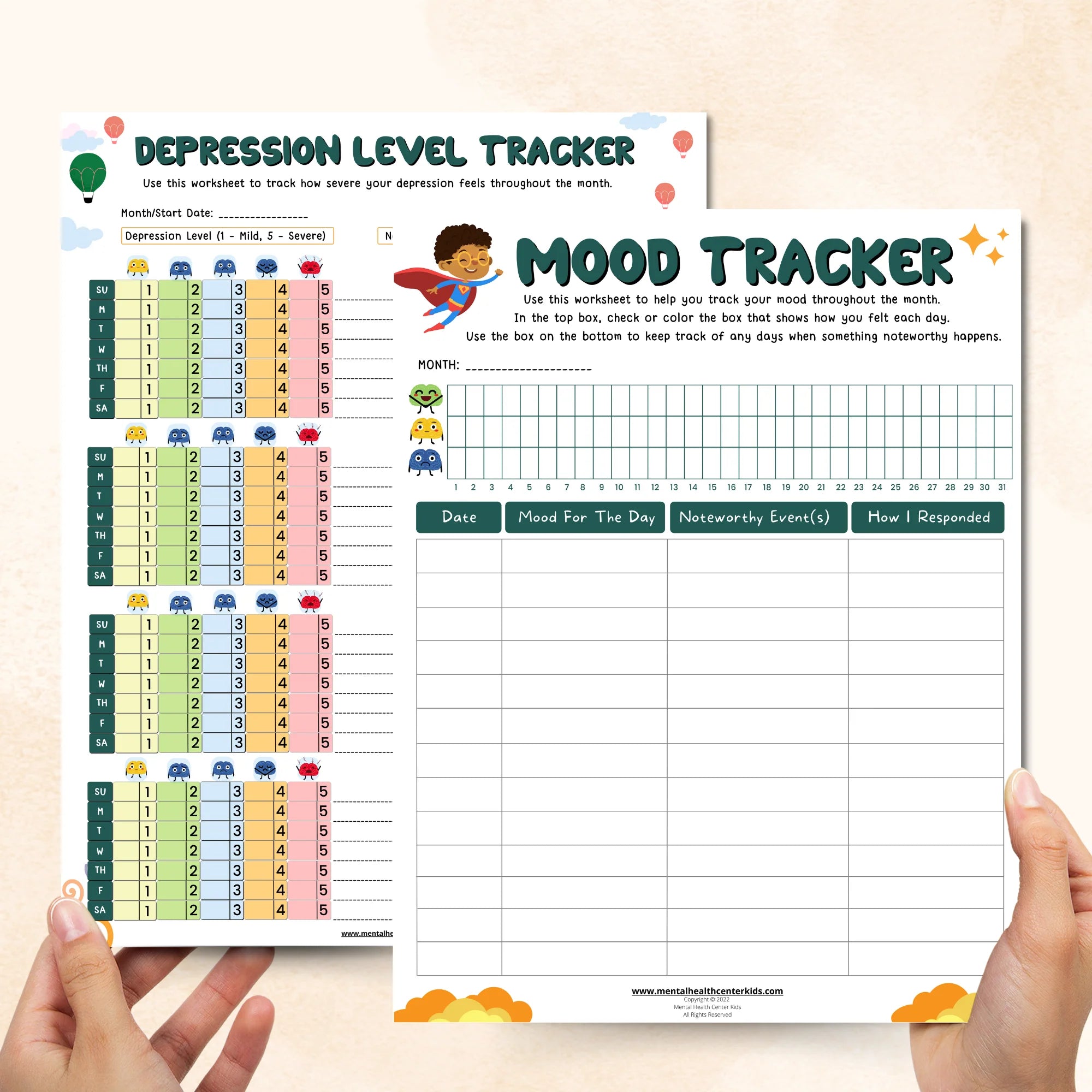
Recognizing patterns in emotions can help children better understand their feelings and responses. Our mood tracker worksheet allows children to track their moods throughout the month, record important events, and reflect on how they handled different situations.
By looking for connections between daily experiences and emotional reactions, children can identify common triggers and build healthy coping and problem-solving skills.
9. Kindness Worksheets

Kindness is a skill that children develop through practice. Our kindness worksheet encourages children to think about how their words and actions affect others while exploring real-life opportunities to show empathy, compassion, and respect.
Through this activity, children learn how small acts of kindness can strengthen friendships and build positive relationships.
10. Reading Social Cues Worksheet

Understanding social cues is an important part of building strong communication and relationship skills. Our reading social cues worksheet helps children learn how to recognize and interpret facial expressions, body language, tone of voice, and personal space cues in everyday situations.
Children practice identifying how others might be feeling and deciding how to respond appropriately. Developing these skills can improve empathy, social awareness, and confidence when interacting with other people.
11. Respecting Personal Space Worksheet

Children often know when they feel uncomfortable, but may not know how to explain why. This worksheet introduces the concept of personal space through "space bubbles." This helps children think about boundaries, trust, and different types of relationships.
Understanding personal space is an important part of building positive relationships. Reflecting on relationships, physical closeness, and social expectations can help children gain a better understanding of personal space and learn respectful ways to interact with others.
12. Friendship Worksheets

Strong friendships are built on trust, kindness, and respect. Our friendship worksheets help children identify the qualities of a good friend and recognize unhealthy friendship behaviors.
Knowing what supportive friendships look like can help children develop healthier peer relationships.
13. Conflict Resolution Worksheets

When a child feels upset after an argument with a friend, it can be hard to know what to do next. Our conflict resolution worksheets can help them practice healthier ways to handle conflict.
The activities encourage children to consider different responses and think about what might help improve the situation. This helps them build confidence in handling disagreements calmly and respectfully.
14. Conversation Skills Worksheet

Imagine a child wants to introduce themselves to a new classmate but isn't sure how. Knowing what to say is only one part of a conversation. Children also need to know how to listen, respond, and bring a discussion to a close.
Our conversation skill worksheets provide examples of common social situations and teach children how to start, continue, or end a conversation. Children can use what they learn during classroom discussions, playdates, or other social situations.
15. Apologizing Worksheets

A child might say “sorry” after hurting a friend’s feelings, but not always understand what makes an apology meaningful. A quick “sorry” may not be enough to make things right.
Our worksheets help children say sincere apologies and take responsibility for their actions. They can practice writing thoughtful apologies using a step-by-step framework. The activities also allow children to consider how their actions affect others.
Benefits of Using Our SEL Worksheets
Our SEL worksheets give children opportunities to practice important life skills such as recognizing emotions and communicating effectively.
Research suggests that SEL skills can have meaningful benefits both inside and outside the classroom. A large review of more than 500,000 students found that SEL programs were associated with stronger social-emotional skills, better academic outcomes, healthier relationships, and improved mental health [*].
Research has also shown positive results among younger children. In one study, preschool children who participated in a 10-week SEL program showed reductions in both behavioral difficulties and emotional problems [*]. This suggests that social-emotional skills can support healthy development from an early age.
Using our SEL worksheets can help children:
-
Recognize emotions: Helps children identify, understand, and express a wide range of feelings.
-
Build emotional awareness: Encourage children to reflect on their moods, emotional triggers, and daily experiences.
-
Strengthen communication skills: Teaches children how to start and end conversations, listen to others, and respond appropriately in social situations.
-
Develop empathy: Helps children consider others’ feelings and understand different perspectives.
-
Improve friendship skills: Explores the qualities of healthy friendships and ways to be a supportive friend.
-
Learn conflict resolution: Gives children tools to work through disagreements and respond to challenges more thoughtfully.
-
Understand personal boundaries: Helps children recognize and respect personal space in different social situations.
-
Take responsibility for mistakes: Teaches children how to offer sincere apologies and repair relationships when problems arise.
Helping Children Build Lifelong Social and Emotional Skills
Social-emotional skills play an important role in how children understand themselves and interact with others.
The worksheets in this collection provide simple ways for children to practice these skills in everyday situations. With regular use, they can help children develop habits that support emotional health, healthy relationships, and lifelong success.
Explore our Feelings Worksheets to help children better understand their emotions and our Social Skills Worksheets to support communication and positive interactions with others.
References:
- Research finds social and emotional learning produces significant benefits for students. (2023, August 2). Yale School of Medicine. https://medicine.yale.edu/news-article/new-research-published-in-child-development-confirms-social-and-emotional-learning-significantly-improves-student-academic-performance-well-being-and-perceptions-of-school-safety/
- Hosokawa R, Matsumoto Y, Nishida C, Funato K, Mitani A. Enhancing social-emotional skills in early childhood: intervention study on the effectiveness of social and emotional learning. BMC Psychol. 2024 Dec 18;12(1):761. doi: 10.1186/s40359-024-02280-w. PMID: 39696710; PMCID: PMC11657640.