|
Key Takeaways:
- Friendship worksheets help kids learn what makes a good friend and how to show kindness and empathy.
- Handouts provide quick, easy-to-read reminders for making and maintaining friendships.
- These printable resources guide kids from understanding friendship to making and keeping real friends.
|
Friendship gives kids a sense of belonging, support, and joy. A good friend listens, shares, and shows kindness and respect.
Friendship worksheets for kids teach these skills. They guide kids through reflection, communication practice, and real-life examples so they understand what healthy friendships look like.
Why Friendship Skills Matter for Kids
Children’s friendships are strongly linked to the way they behave. Research suggests that kids who show more prosocial behavior tend to be better liked by peers and tend to have reciprocated friendships [*].
Childhood friendships play a major role in a child’s happiness. Kids with close, supportive friends tend to feel happier, satisfied, less lonely, and more confident in themselves [*].
Friendship plays an important role not only in childhood but also during the teen years. Research shows that teens with supportive friendships report less stress and better mood. A strong social network gives them confidence and helps them feel safe.
Because these skills start in childhood, teaching kids healthy friendship habits now sets the stage for stronger mental health as they grow.
How Our Friendship Worksheets Help
Friendship can feel overwhelming when viewed as one big challenge. Many children want to make friends but don't know how to start.
These worksheets break the process into digestible components: understanding what friendship means, identifying where to meet people, learning conversation techniques, maintaining relationships, and solving problems when they arise.
By tackling one aspect at a time, kids can build confidence little by little rather than feeling overwhelmed by the pressure of making friends.
These worksheets provide the specific actions, behaviors, and answers to questions kids are too embarrassed to ask: "What do I actually say?" "Where do I find people like me?" "How do I know if someone wants to be my friend?"
By explaining the friendship-making process, these resources empower children to take action and shift the narrative from "I'm bad at making friends" to "I'm learning friendship skills, and I'm getting better with practice."
Printable Friendship Worksheets
Below is a collection of printable friendship worksheets that help kids connect with others and understand what positive friendships look like.
Friendship Worksheets

The 2-page Friendship Worksheets set provides activities for understanding and practicing friendship skills.
The Being a Good Friend worksheet teaches kids what healthy, supportive friendships look like in everyday life. It breaks down positive traits, such as honesty, loyalty, and good listening skills, and helps kids connect each trait to a real behavior. It includes simple real-life scenarios where kids can write how they would show kindness, support, or empathy to a friend. This encourages problem-solving, emotional awareness, and the ability to take another person’s perspective.
The Good Friend vs. Not A Friend worksheet helps kids think about their own friendships and how they respond to others. They reflect on which behaviors make a good friend, and ask them to think about their good friends and what makes them special.
Making Friends Worksheets

The Making Friends Worksheets is a ready‑to‑use, 3‑page PDF resource for children that aims to teach them how to make, build, and maintain friendships.
The Understanding and Meeting Friends worksheet includes 3 sections: What Makes a Good Friend?, Where to Find Friends, and Courage to Connect. It forms a clear progression from understanding what a good friend looks like to actually making real social connections.
Next, the Building & Maintaining Friendships worksheet takes kids from initial connection through long-term relationship building. It teaches kids the importance of being a good listener, showing care, and solving friendship problems.
Lastly, the Friendship Conversation Starters worksheet directly addresses one of the biggest challenges kids face when making friends: starting and maintaining conversations. Many children genuinely want to connect with peers but freeze up because they don't know what to say. The worksheet covers eight different conversation categories, which teach kids that there are many ways to connect with others.
BONUS: Friendship Handouts and Posters
In addition to friendship worksheets, handouts and posters can reinforce friendship concepts. These resources serve as quick reference guides that kids can turn to whenever they need a reminder about positive social behaviors.
Friendship-Making Skills

This handout serves as a "cheat sheet" kids can glance at when they need a confidence boost or a reminder of what steps to take to build friendships. The handout is divided into five distinct sections with color-coded boxes and icons, which makes it easy to scan. Each section addresses a different aspect of making friends.
Being a Good Friend
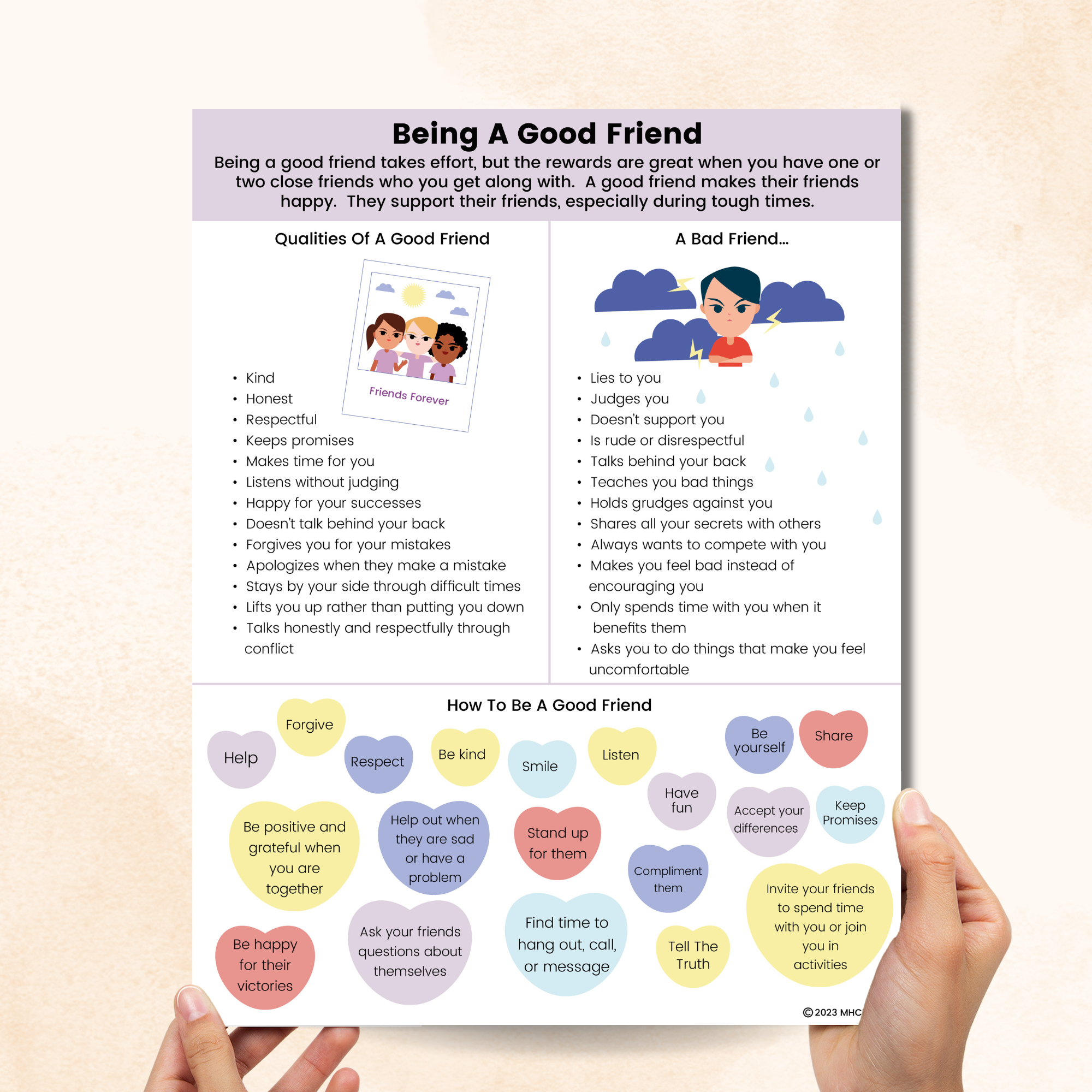
The Being a Good Friend handout focuses on the qualities and behaviors that define good friendships. It defines key friendship qualities and identifies characteristics of a “bad” friend. This is particularly valuable because many kids struggle to recognize unhealthy friendships. This way, kids can learn to evaluate their current friendships and reflect on their own behavior.
Finding And Making Friends

The handout discusses interpersonal effectiveness, which is one of the four core skill modules in DBT (Dialectical Behavior Therapy). The module teaches healthy ways to ask for what you need in relationships while maintaining self-respect and boundaries.
The handout encourages taking action ("make the first move," "join ongoing conversations") while also teaching calibration ("don't overdo it," "express genuine interest"). This prevents kids from either being too passive or too aggressive in their friendship-seeking.
Start Helping Kids Make Friends Today
The resources above address the complete friendship cycle, from understanding what friendship means, to finding potential friends and maintaining those friendships.
The worksheets explain concepts, then provide activities to apply them. Handouts can be referenced before, during, and after social situations.
Whether you're a parent helping one child navigate friendship challenges or a counselor serving dozens of students with social skills goals, this collection provides everything you need to teach friendship as a learnable skill set rather than an innate talent some kids have, and others don't.
If you need additional support, you can explore more social skills worksheet resources here.
References:
- Monks, C. P., & Rix, K. (2024). Friendships among young children: links with social behaviour. Early Child Development and Care, 194(11–12), 1230–1243. https://doi.org/10.1080/03004430.2024.2418296
- Holder, Mark & Coleman, Ben. (2015). Children’s Friendships and Positive Well-Being. Friendship and Happiness: Across The Life-Span and Cultures. 81-94. 10.1007/978-94-017-9603-3_5.