Negative thinking patterns are automatic, unhelpful ways of thinking that can make people feel sad, anxious, or stressed. These thoughts involve focusing too much on the negative, such as imagining the worst possible scenario or making problems seem bigger than they are. The first step to overcoming them is to notice when they arise.
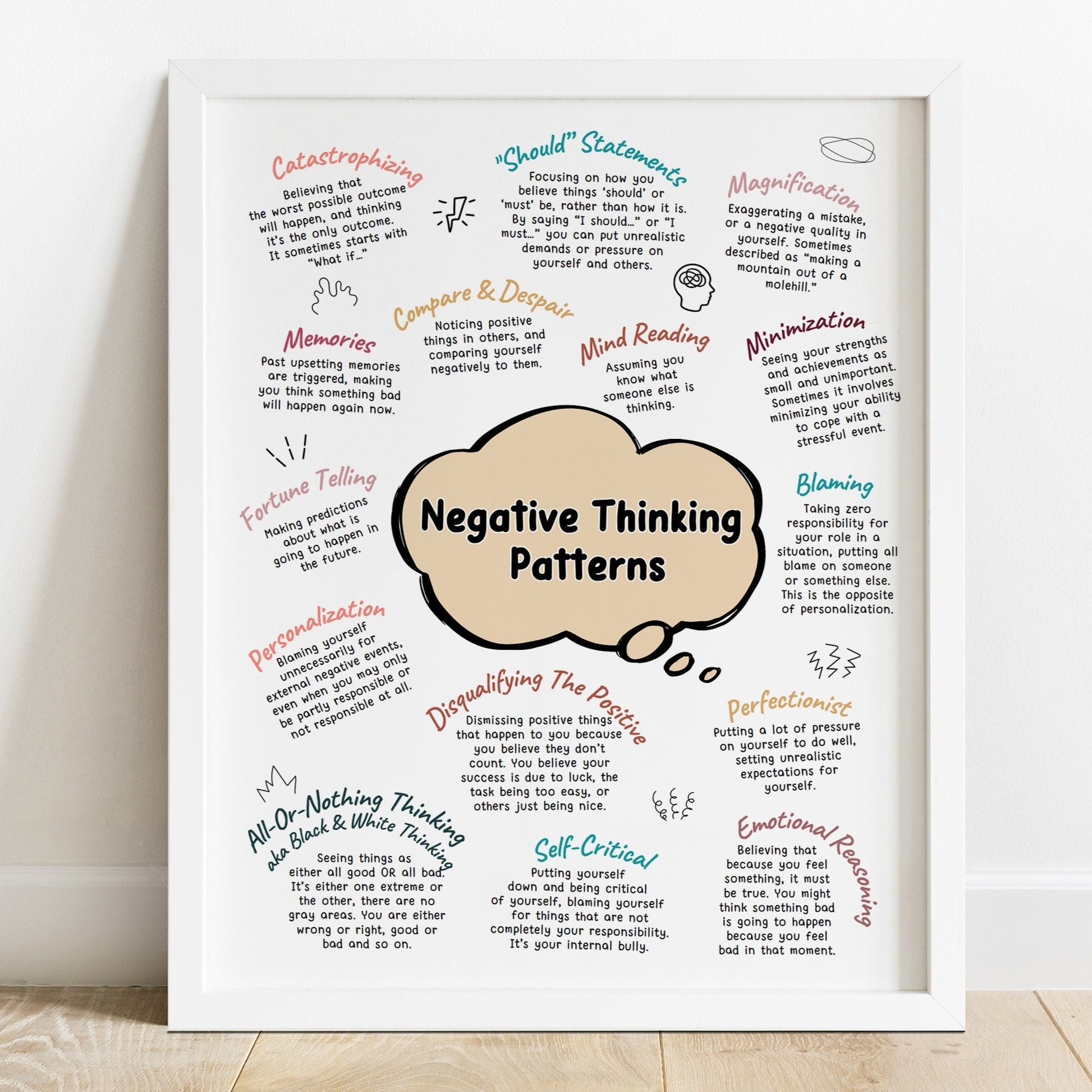
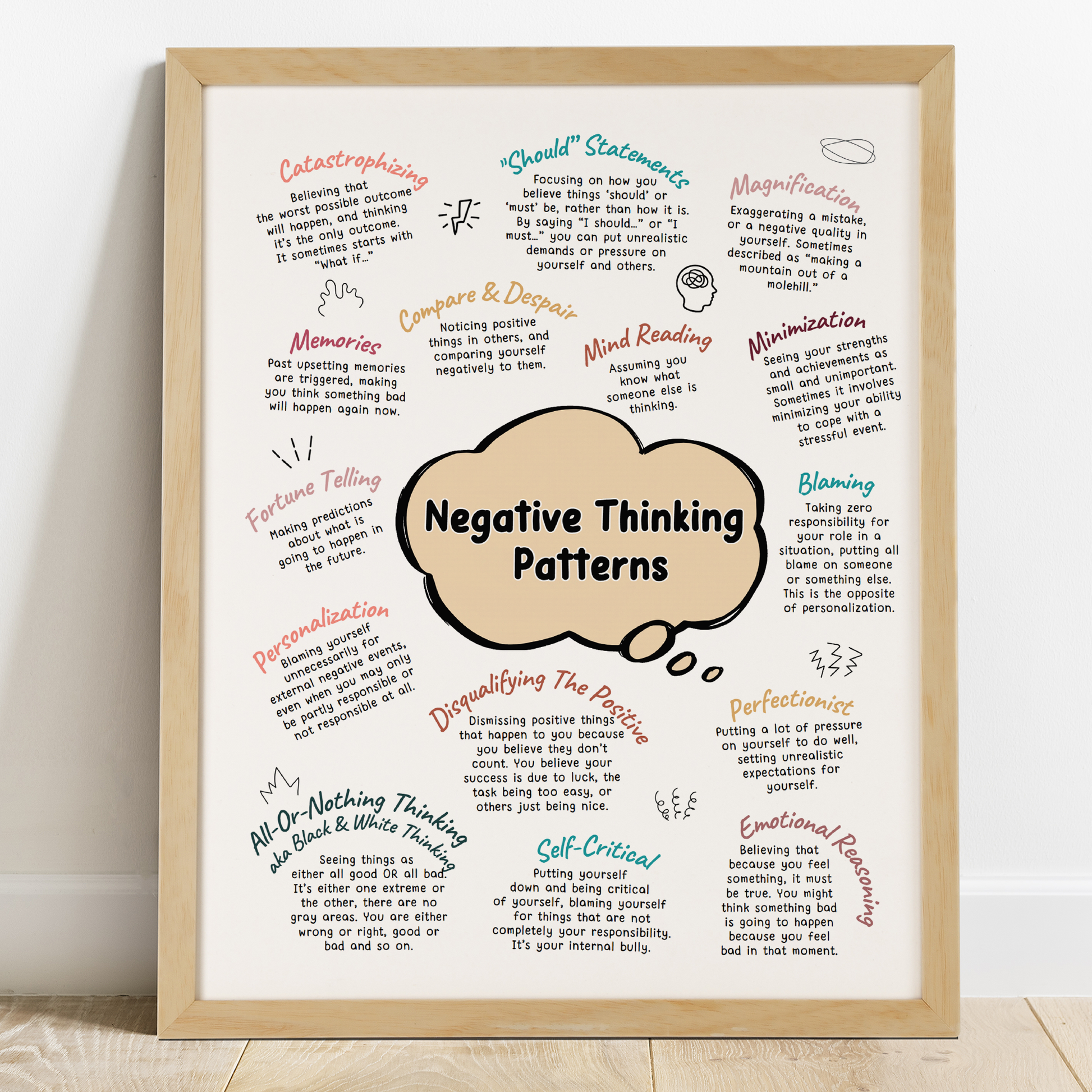
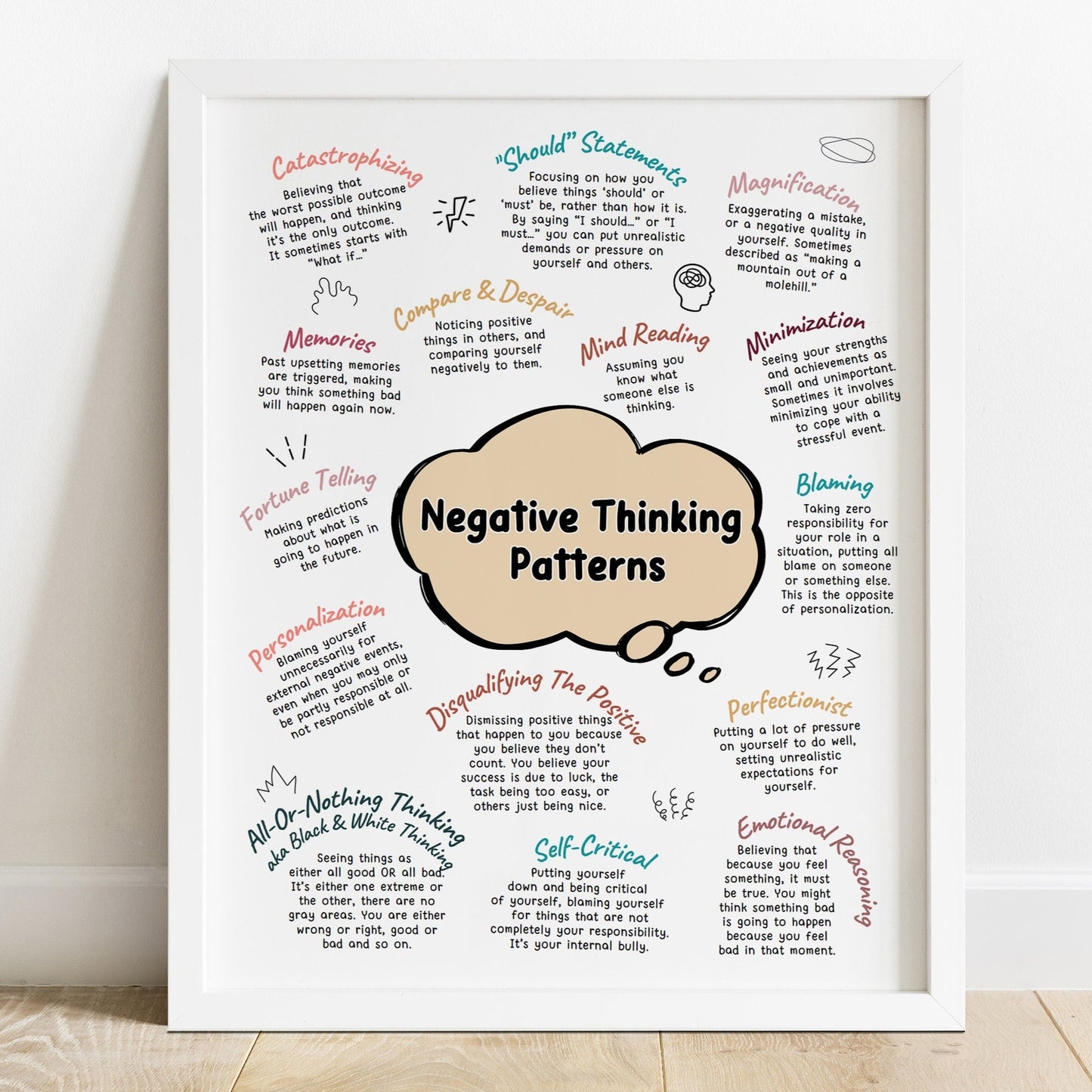
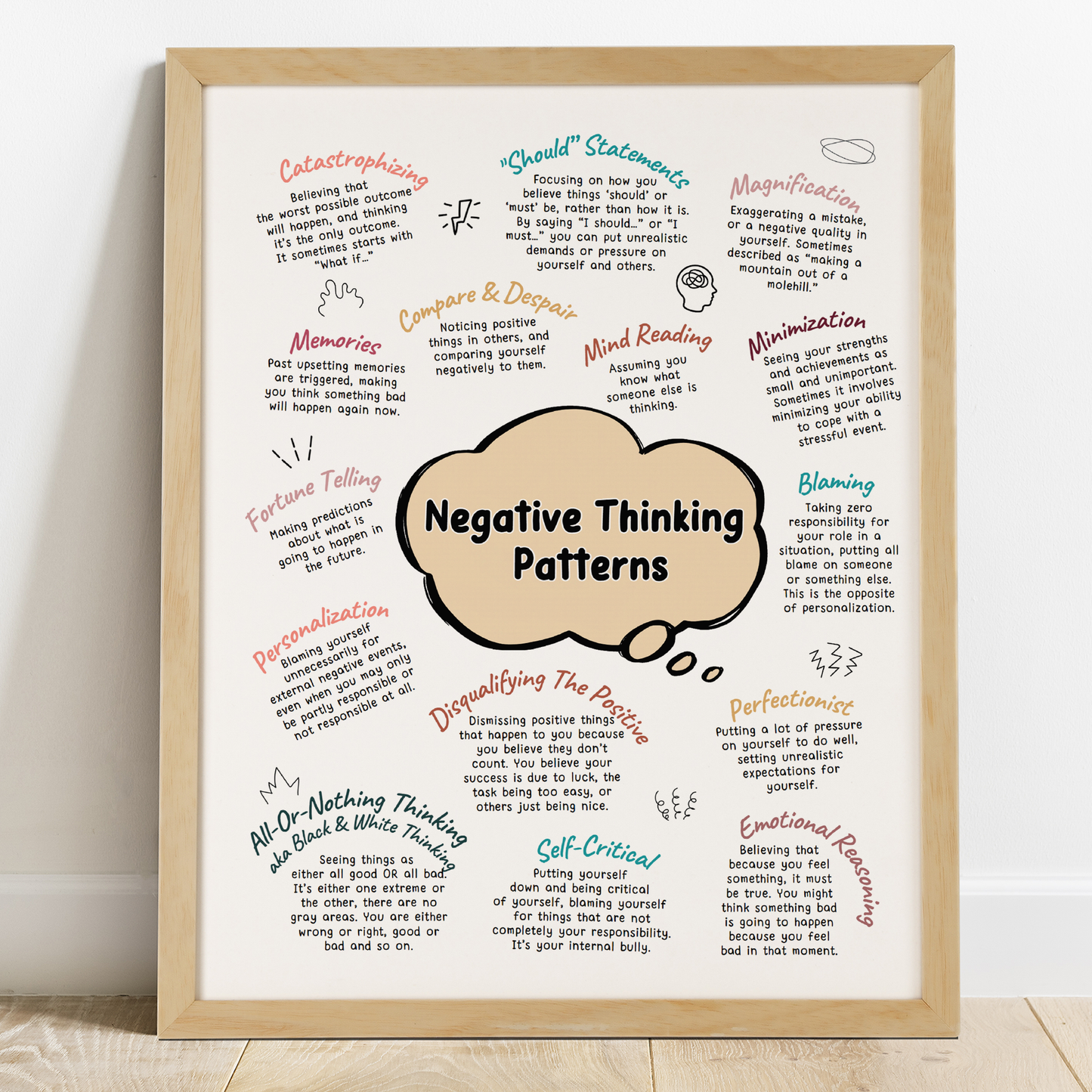
The Negative Thinking Patterns poster highlights common unhelpful thought patterns that affect a client’s emotions and everyday decisions. Examples of these distorted thinking patterns include blaming, should statements, and all-or-nothing thinking. Each type is also explained in simple terms to help clients better understand how they manifest.
Seeing this poster reminds kids and teens to pause and evaluate their thoughts before they believe them. With practice, they can catch and reframe such thoughts for better emotional control and a healthy mindset.
Adults supporting these efforts may suggest creative activities like a thought swap, where kids or teens reframe negative thoughts into positive ones. A helpful tool to support this process is the Changing Negative Thoughts to Positive Thoughts worksheet.
For more resources on understanding and managing negative thinking patterns feel free to explore our 19-page CBT Handouts Bundle.
*This item is an instant digital download. A link to download your files will be emailed to you once payment is confirmed.
Want more resources like this? Check out our full catalog of CBT worksheets and handouts.
References:
- Colvin, E., Gardner, B., Labelle, P. R., & Santor, D. (2021). The automaticity of positive and negative thinking: A scoping review of mental habits. Cognitive Therapy and Research, 45(6), 1037-1063. https://doi.org/10.1007/s10608-021-10218-4
- Hossain, M. S., & Begum, R. (2009). Understanding patterns of cognitive distortions (M.Phil. thesis). Department of Clinical Psychology, University of Dhaka.
- Rood, L., Roelofs, J., Bögels, S. M., & Alloy, L. B. (2009). Dimensions of negative thinking and the relations with symptoms of depression and anxiety in children and adolescents. Cognitive Therapy and Research, 34(4), 333-342. https://doi.org/10.1007/s10608-009-9261-y