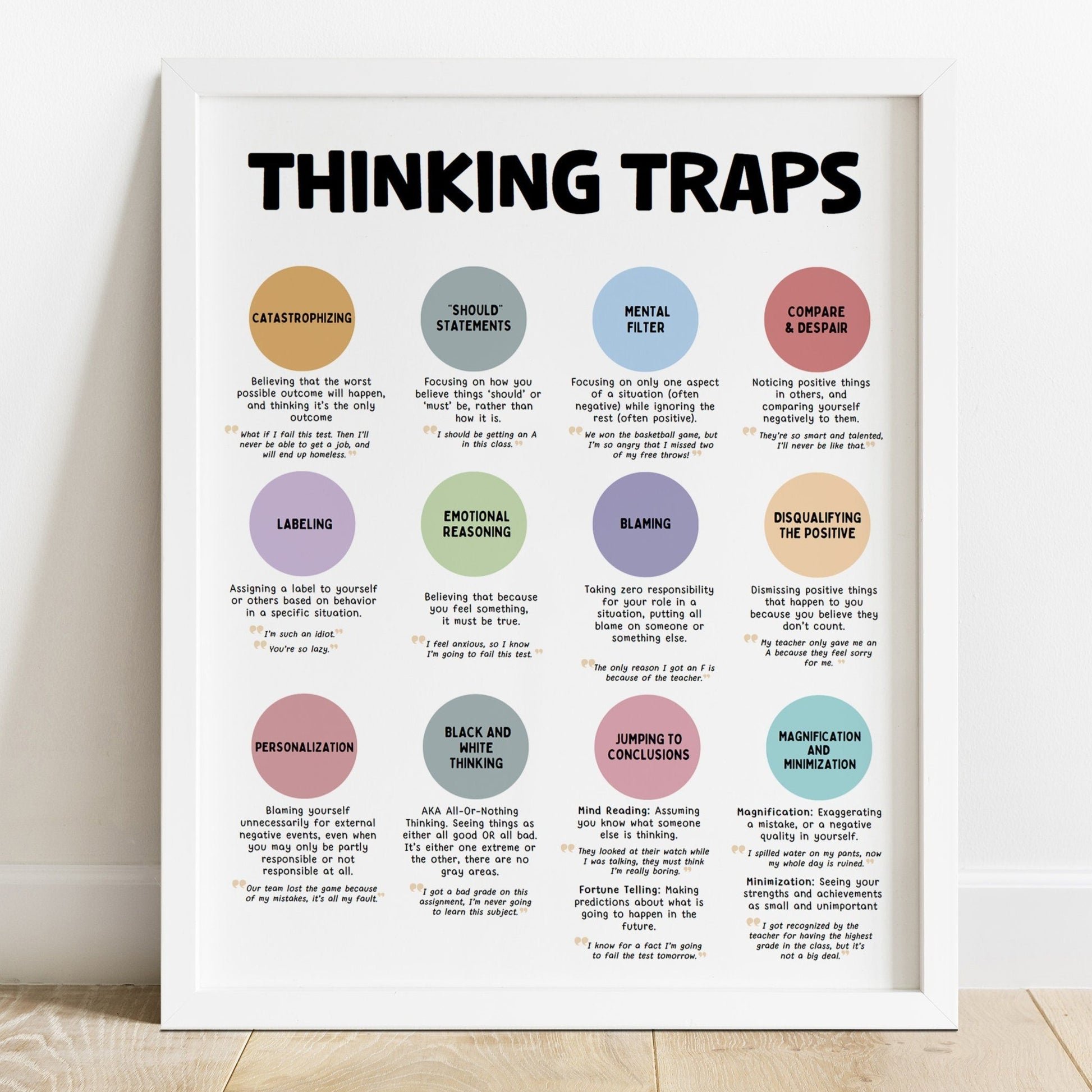
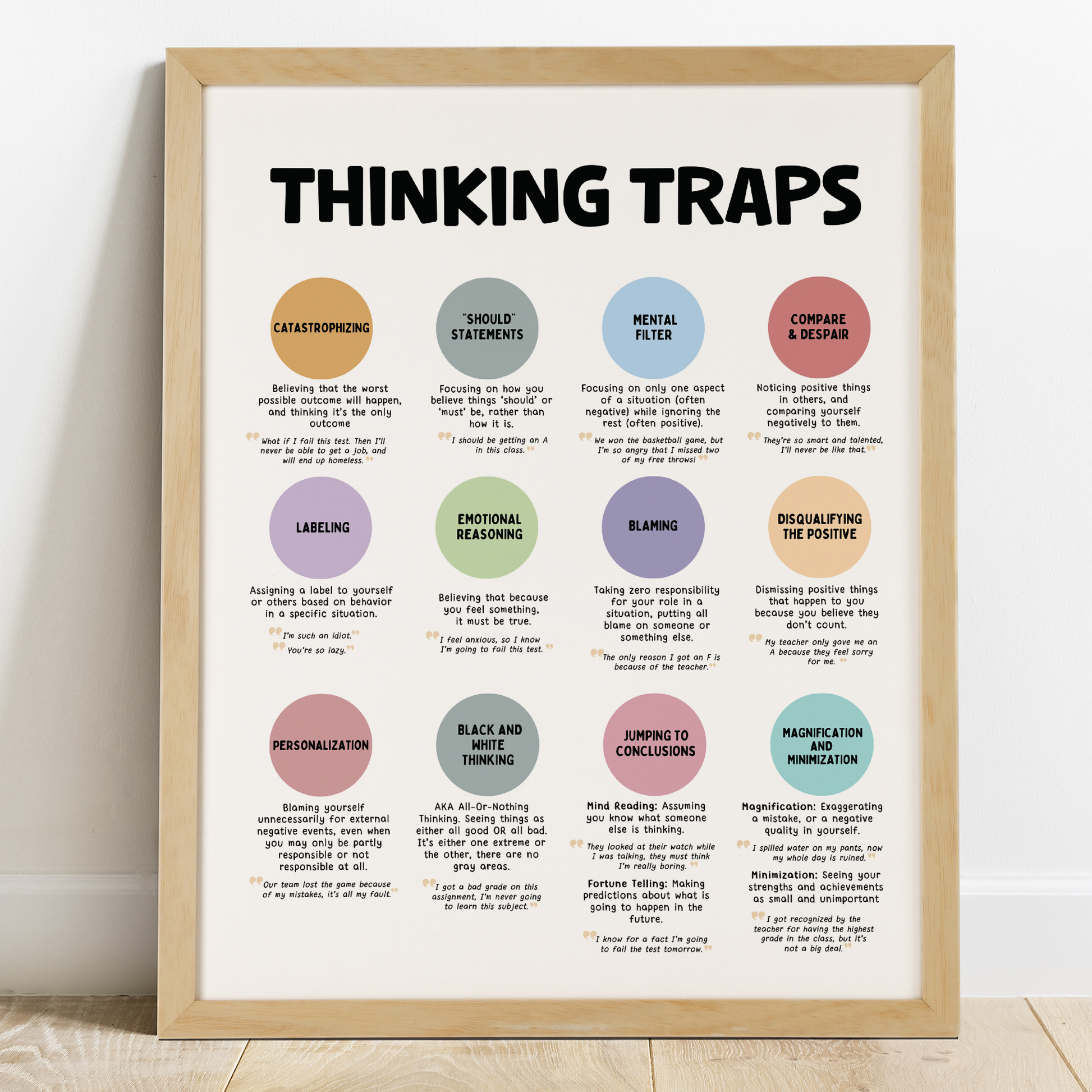
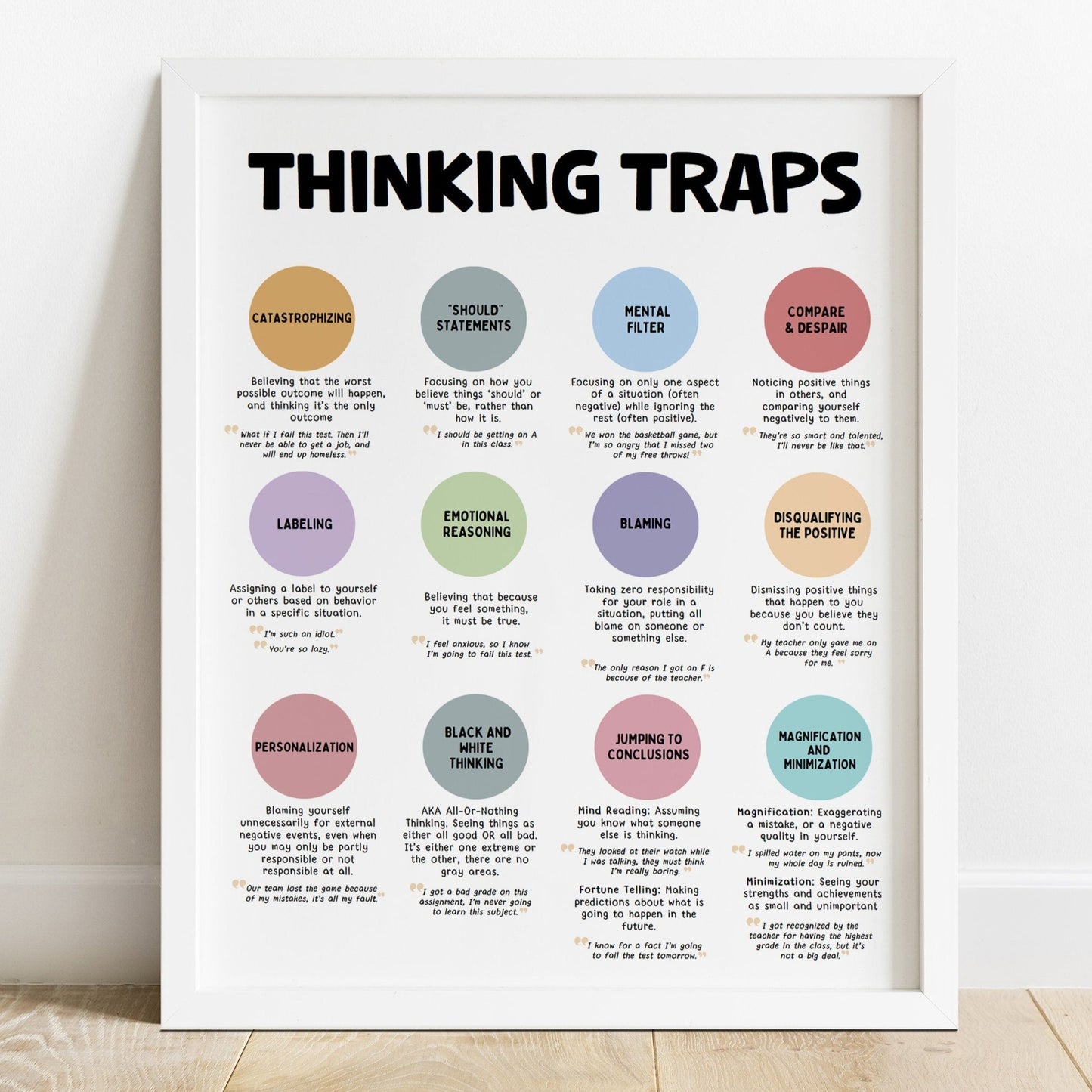
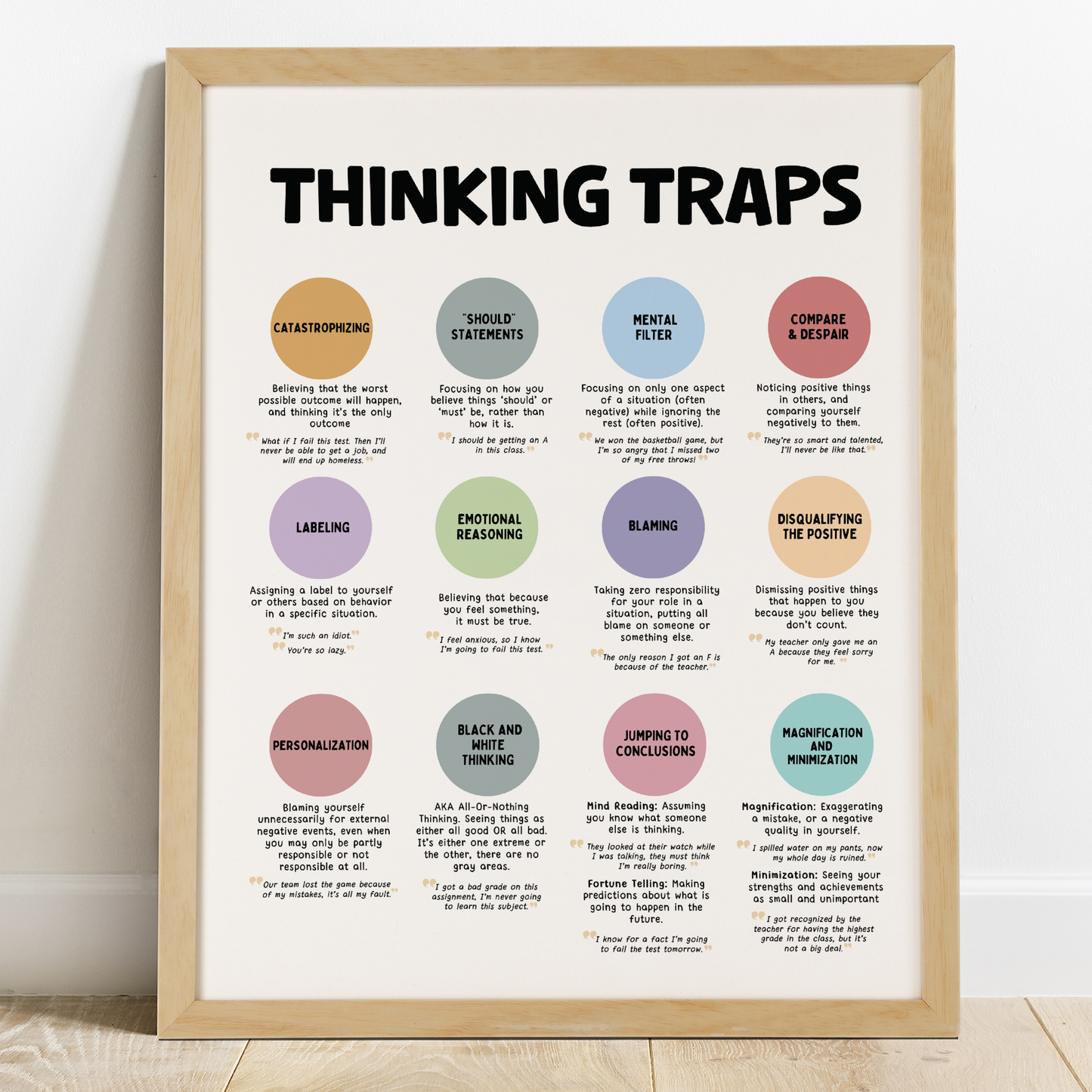
"Thinking traps" are patterns of thoughts that aren’t always true, yet people often believe them. This can happen for various reasons, such as past experiences, feelings of self-doubt, or focusing on the negative. Research shows that thinking traps may lead to anxiety, depression, and unhealthy thoughts.
The Thinking Traps Poster shows the different types of thought patterns that can lead to intense feelings and negative behaviors. Each type is accompanied by sample phrases that show how individuals might express these thoughts to increase self-awareness. This can be displayed in therapy offices or classrooms where topics like overcoming negative thinking and developing healthier thought habits are being discussed.
Having this poster can help young people spot their thinking traps and build more balanced ways of thinking. It is a good supplement to cognitive behavioral therapy (CBT) lessons when discussing cognitive distortions. Some kids respond better to the term thinking traps.
Caring adults might suggest keeping a journal where they write down any thinking traps they notice, and then review them together to discuss ways to challenge these thoughts.
Our 19-page CBT Handouts Bundle can support those learning about CBT concepts.
*This item is an instant digital download. A link to download your files will be emailed to you once payment is confirmed.
Want more resources like this? Check out our full catalog of CBT worksheets and handouts.
References:
- BUĞA, A., & KAYA, İ. (2022). The role of cognitive distortions related academic achievement in predicting the depression, stress and anxiety levels of adolescents. International Journal of Contemporary Educational Research, 9(1), 103-114. https://doi.org/10.33200/ijcer.1000210
- Friedman, H. H. (2023). The thinking traps that ruin your happiness: How to recognize, challenge, and overcome cognitive distortions. SSRN Electronic Journal. https://doi.org/10.2139/ssrn.4670101
- Maric, M., Heyne, D. A., Van Widenfelt, B. M., & Westenberg, P. M. (2010). Distorted cognitive processing in youth: The structure of negative cognitive errors and their associations with anxiety. Cognitive Therapy and Research, 35(1), 11-20. https://doi.org/10.1007/s10608-009-9285-3
- Zaiden, F., Mahfar, M., Senin, A. A., & Fakhruddin, F. M. (2023). Global research pattern of cognitive distortion: A bibliometric analysis. Sage Open, 13(4). https://doi.org/10.1177/21582440231219658