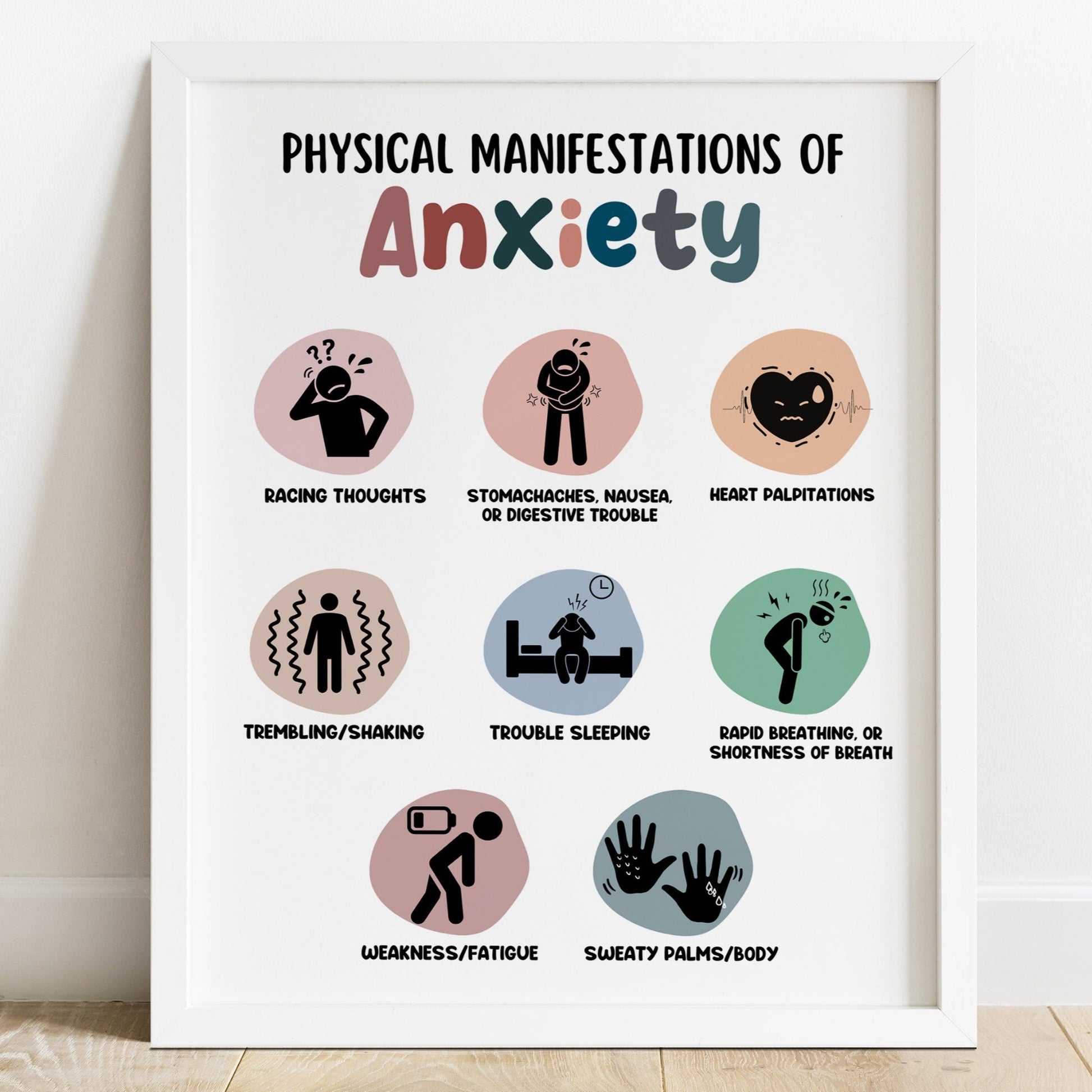
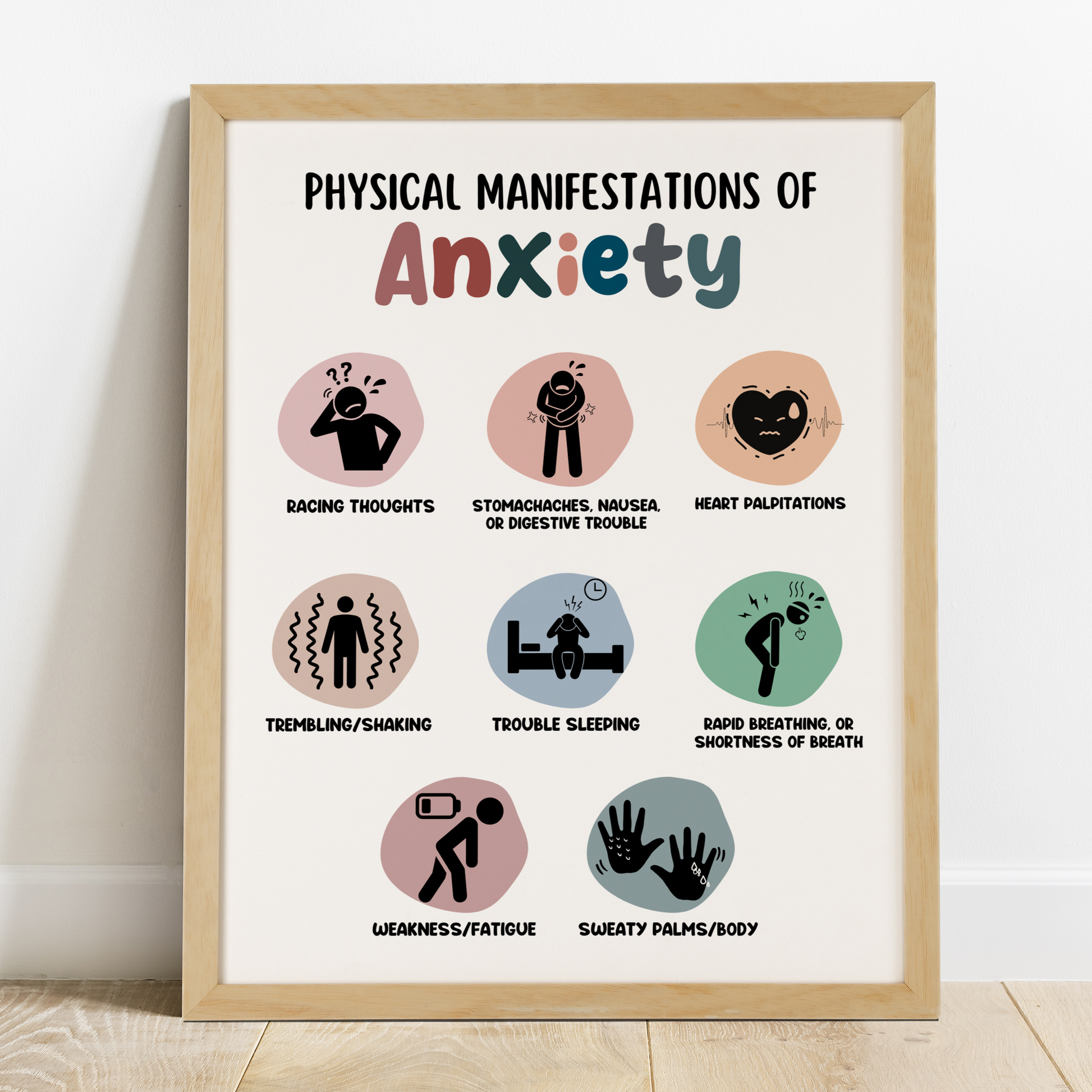
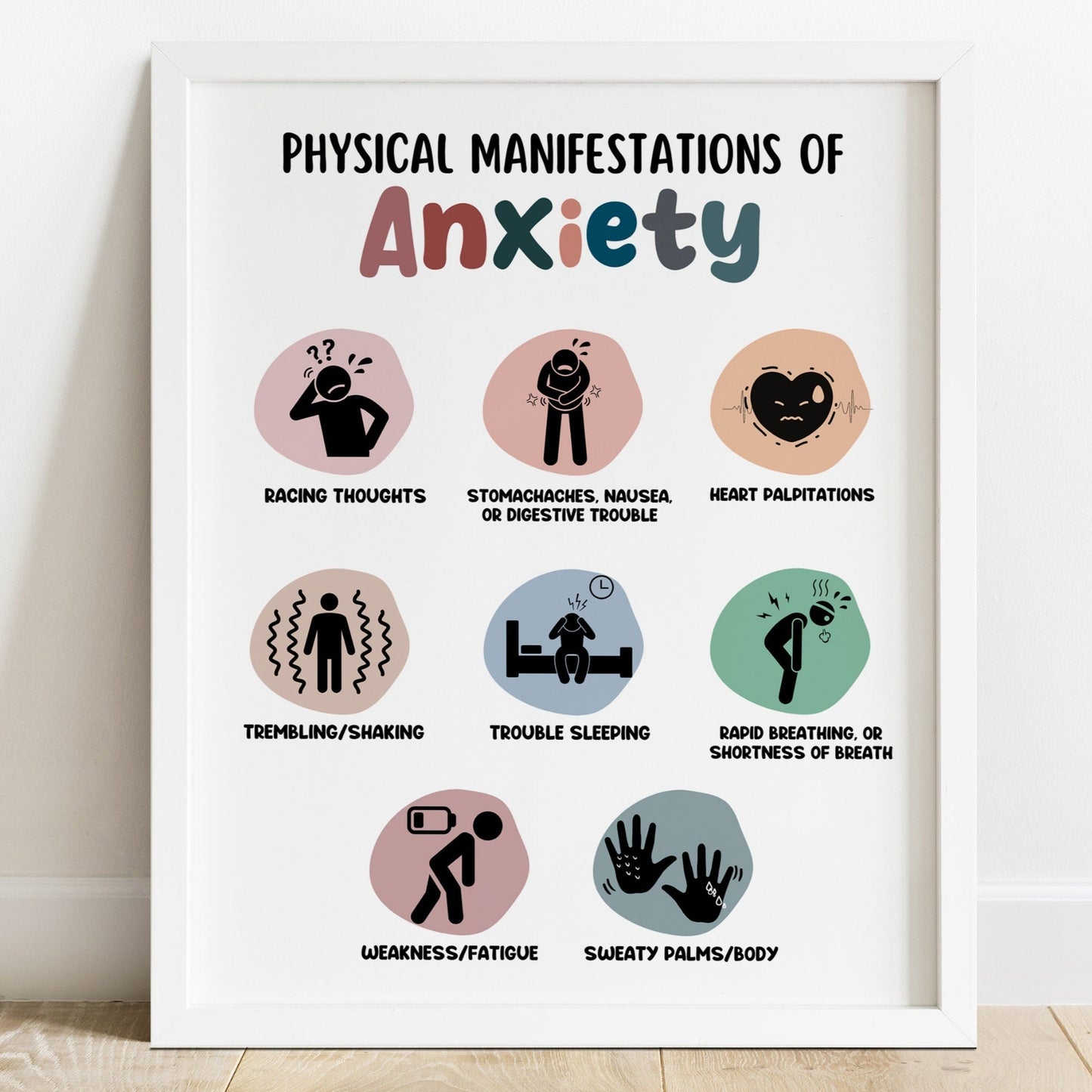
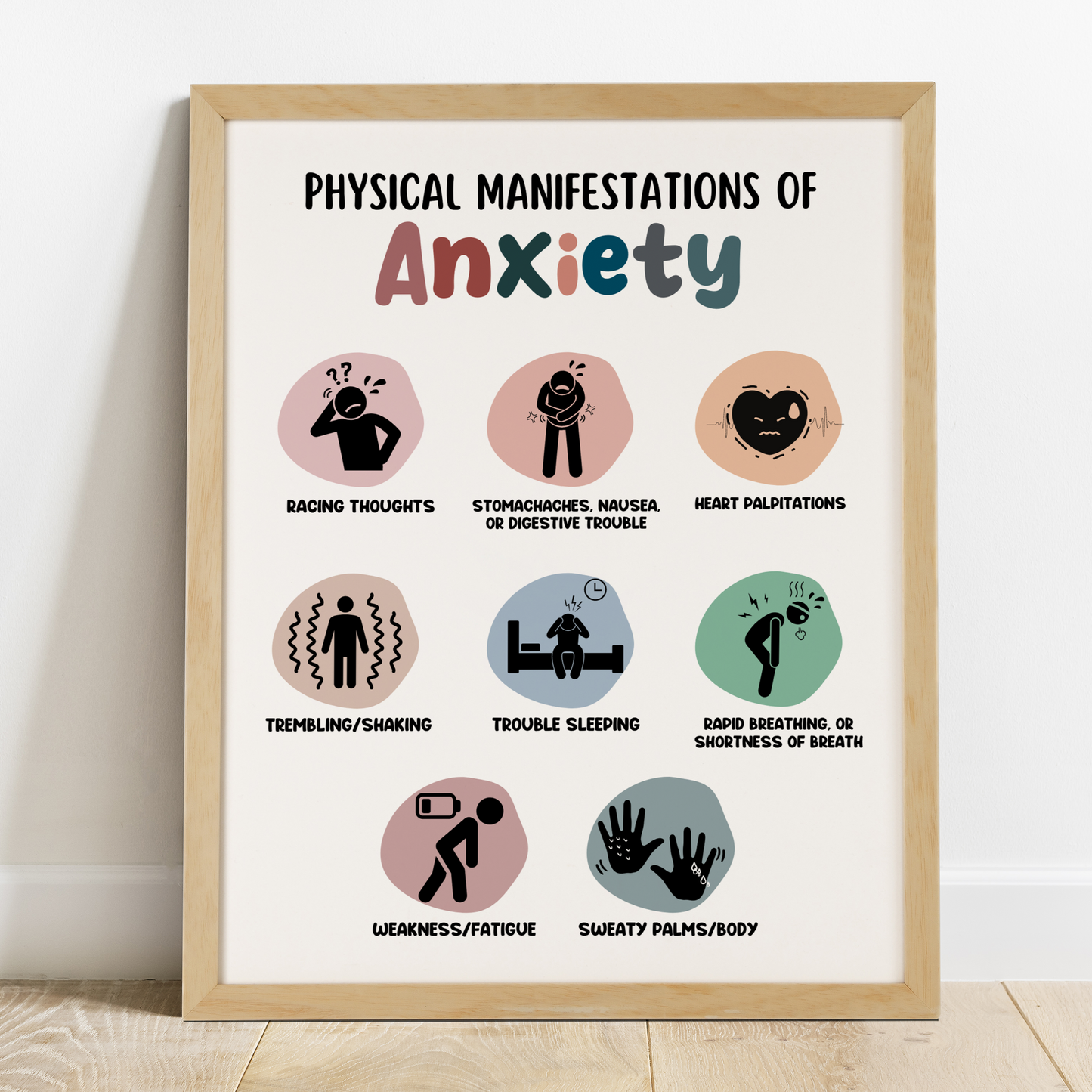
Anxiety doesn’t just affect thoughts—it can also be felt in the body. A racing heart, tense muscles, or an upset stomach can make anxious feelings even more overwhelming. While these symptoms may differ for each person, understanding how the body reacts to stress can help in finding ways to manage it.
The Physical Manifestations of Anxiety poster breaks down how anxiety affects the body in a simple and clear way. It lists common physical responses, such as heart palpitations, trouble sleeping, nausea, and fatigue, which makes it easier to recognize anxiety’s impact. The guide also includes illustrations to help young clients better visualize what their bodies may be telling them.
Having this as a reference can help kids and teens become more aware of their body’s signals and take steps to feel better. They can do a "body check-in" routine, where they pause throughout the day to notice how they feel and then explore relaxation techniques, like stretching or deep breathing, to ease discomfort.
Caring adults can suggest doing small actions that reduce physical stress, such as gentle movement breaks or sensory activities. They can also help in building a calming routine that includes proper rest, hydration, and mindful breathing.
The How Anxiety Feelings in My Body is an alternative worksheet that invites kids to explore how anxiety feels to them.
*This item is an instant digital download. A link to download your files will be emailed to you once payment is confirmed.
Want more resources like this? Check out our full catalog of anxiety worksheets and handouts.
References:
- Larson, G. E., Booth-Kewley, S., Merrill, L. L., & Stander, V. A. (2001). Physical symptoms as indicators of depression and anxiety. Military Medicine, 166(9), 796-799. https://doi.org/10.1093/milmed/166.9.796
- Henningsen, P., Zimmermann, T., & Sattel, H. (2003). Medically unexplained physical symptoms, anxiety, and depression. Psychosomatic Medicine, 65(4), 528-533. https://doi.org/10.1097/01.psy.0000075977.90337.
- Suls, J., & Howren, M. B. (2012). Understanding the physical-symptom experience. Current Directions in Psychological Science, 21(2), 129-134. https://doi.org/10.1177/0963721412439298